2026 How to Choose the Best Artificial Grass Turf for Your Project?
When considering a project involving Artificial Grass Turf, the choices can seem overwhelming. Numerous options exist, each with distinct features and benefits. Selecting the right turf requires careful thought and assessment of specific needs.
The ideal Artificial Grass Turf is not just about aesthetics; it's also about functionality. Various factors come into play, including durability, drainage, and overall maintenance. Many people overlook the importance of these elements, leading to dissatisfaction later. It’s essential to reflect on your project’s purpose and expected usage.
In this guide, we will explore key considerations for choosing the best Artificial Grass Turf. We will highlight common pitfalls and share insights from industry experts. Understanding your needs will help in making a confident decision.
Understanding Different Types of Artificial Grass Materials
When selecting artificial grass, understanding materials is crucial. Common options include polyethylene, polypropylene, and nylon. Each type has distinct qualities that suit different needs. Polyethylene is popular for residential spaces. It feels soft and looks natural, making it ideal for lawns and playgrounds.
On the other hand, polypropylene is more affordable but less durable. It's often used in low-traffic areas. This material can be a cost-effective choice for temporary setups. Lastly, nylon stands out for its strength. It's perfect for high-traffic zones, like sports fields. However, its price can be a barrier for some projects.
Reflect on your specific requirements. Think about durability, appearance, and budget constraints. Not all materials fit every scenario. Your project may require a deeper investigation into these options. Each material has pros and cons. A careful selection can avoid future disappointments. The right turf should meet your unique needs.
Evaluating the Quality and Durability of Turf Options
When evaluating artificial grass turf options, focus on quality and durability. Look for materials that withstand weather changes. High-quality turfs often use UV-resistant fibers. These prevent fading and maintain vibrancy. Durability is key for longevity. Some varieties can endure heavy foot traffic. Others may flatten and wear out faster.
Consider the blade height and density. Thicker blades often feel more realistic. A denser turf can mimic the look of real grass effectively. However, high density might not drain water as well. Always check the backing material as well. A strong backing adds stability and support against wear.
Reflect on your specific needs. Not all turfs are fit for every environment. Consider pets, children, and usage frequency. A turf that suits play areas may not work for landscaping. Quality checks can be subjective. Engage with manufacturers or retailers. Ask for samples and inspect them closely. The right turf should align with your project goals while addressing potential shortcomings.
Factors to Consider for Climate and Environmental Conditions
When selecting artificial grass turf, consider your local climate and environmental conditions. Different regions have unique weather patterns that influence turf performance. For example, areas with high UV exposure require materials that resist fading. A study from the Synthetic Turf Council indicates that over 80% of turf degradation occurs due to sunlight exposure. This highlights the importance of choosing the right product for sunny locales.
In addition, consider your region's rainfall patterns. In areas with heavy rainfall, drainage is crucial. Turf with proper drainage must be prioritized to prevent water pooling. According to data from the American Recycling Association, poorly-drained artificial grass can lead to bacterial growth, which poses health risks. It’s essential to assess this factor, especially in humid climates.
Lastly, think about the local ecosystem. Some artificial grass products are designed to be environmentally friendly, featuring recycled materials. While these may initially be more expensive, they often result in lower maintenance costs. Research by the Green Sports Alliance shows that sustainable options can reduce environmental impact significantly. Focus on these factors to make a well-informed decision for your project.
Assessing the Cost and Budget for Your Artificial Grass Project
When assessing the cost and budget for your artificial grass project, it’s crucial to understand the factors influencing pricing. According to industry reports, quality synthetic turf typically ranges from $2 to $8 per square foot, depending on features such as durability and realism. Installation costs can add between $1 to $4 per square foot. Be sure to account for additional expenses like ground preparation, infill materials, and any landscape elements.
Tips: Plan a detailed budget. Include maintenance costs projected over the lifespan of the turf, which can be up to 15 years. Remember, the initial investment may be higher than natural grass, but the long-term savings on water and mowing can offset those costs.
Cost variations can reflect choices in turf type and installation complexity. While low-budget options exist, they might sacrifice quality and longevity. Research different providers and materials. Read reviews and seek expert opinions. Without this, ensuring reliability can be difficult. Aim for a balance between cost and quality to maximize your investment in artificial grass.
Installation Techniques and Maintenance Requirements for Turf
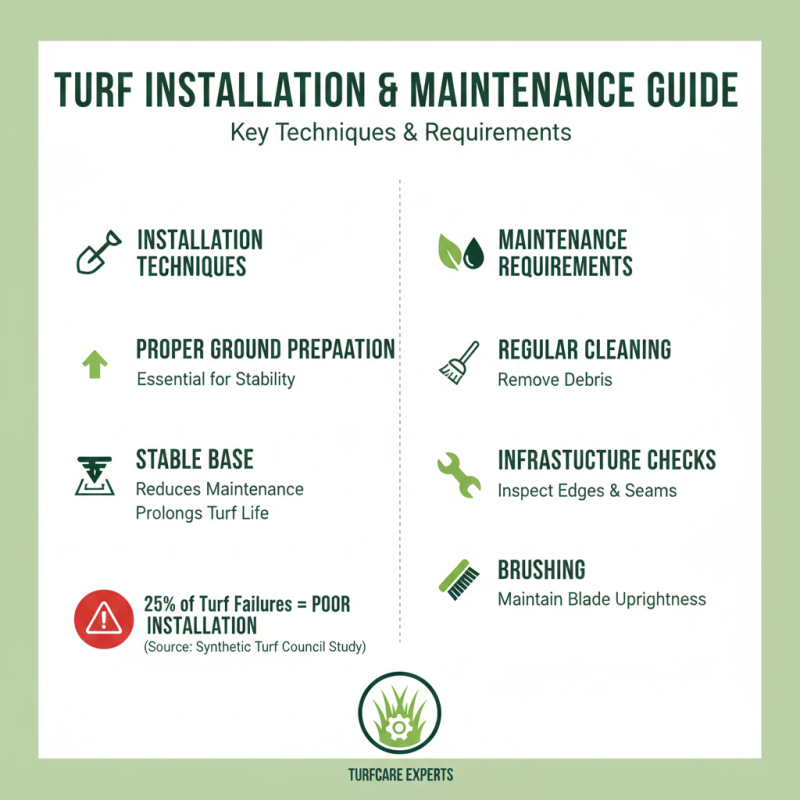
When selecting artificial grass turf, installation techniques require careful consideration. Proper preparation of the ground is essential. A stable base reduces maintenance needs and prolongs turf life. According to a study from the Synthetic Turf Council, 25% of turf failures are due to poor installation.
The right maintenance is equally important. Regular brushing helps keep the fibers standing upright. This enhances appearance and durability. It's recommended to remove debris weekly to prevent mold growth. Research shows that 30% of users neglect this step, leading to premature wear. Using infill can also improve turf resilience, but it demands regular replenishment.
Finally, while artificial grass is low maintenance, it isn’t maintenance-free. Routine checks for uneven surfaces or loose seams can prevent bigger issues. An investment in quality and correct upkeep translates to long-lasting satisfaction in your project. Ensuring proper care from the start is crucial.