Top 10 Tips for Choosing the Best Turf Grass for Your Lawn?

Choosing the right Turf Grass for your lawn can significantly impact its appearance and health. With numerous options available, it’s easy to feel overwhelmed. Different types of Turf Grass thrive in various climates and soil conditions. This variety means that selecting the right one requires careful consideration.

Keep in mind that not all grass types are equally suited to your needs. Some prefer sunlight, while others tolerate shade better. Understanding your lawn’s specific conditions is crucial for success. Will it receive heavy foot traffic? This will help narrow down your choices.

Additionally, it's essential to remember that no Turf Grass is perfect. Each type has its pros and cons. Some may require more water, while others might need frequent mowing. Reflect on your lifestyle and maintenance preferences. This will guide you in making a more informed decision that ensures your lawn remains lush all year round.
Top 10 Tips for Choosing the Best Turf Grass for Your Lawn?

Understanding Your Climate and Region for Turf Grass Selection

Top 10 Tips for Choosing the Best Turf Grass for Your Lawn?

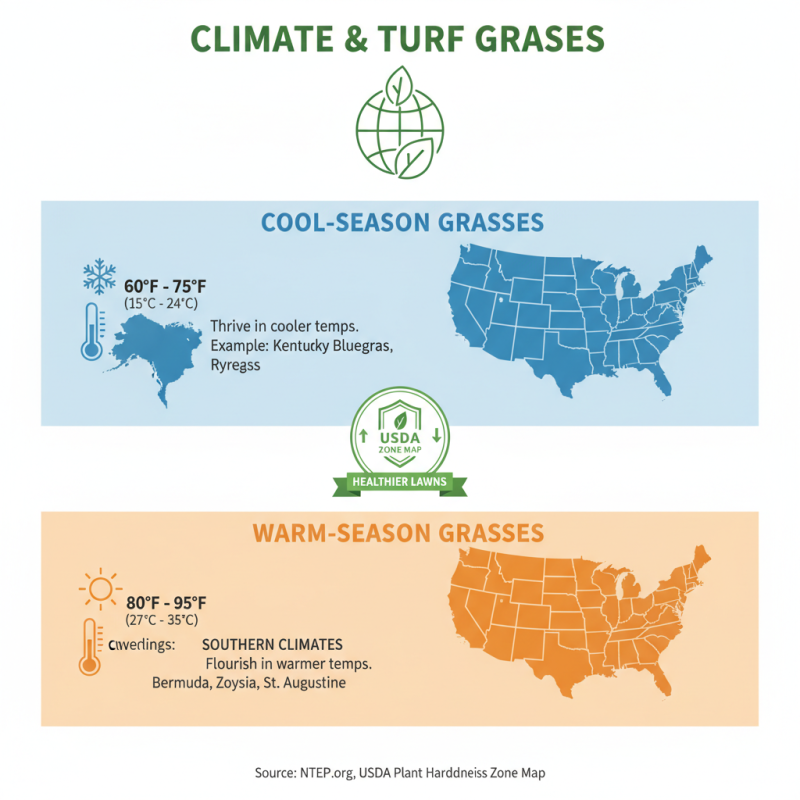
When selecting turf grass, understanding your climate is essential. Different grass types thrive in various conditions. For instance, cool-season grasses prefer northern climates with temperatures between 60°F and 75°F. In contrast, warm-season grasses flourish in southern regions with temperatures from 80°F to 95°F. The USDA Plant Hardiness Zone Map identifies which grass types suit your area best. According to the National Turfgrass Evaluation Program, region-specific grass varieties often result in healthier lawns.

Local rainfall and soil conditions also affect choice. For example, grass requires ample water for growth. In regions with high humidity, such as the Southeast, grasses like Zoysia perform well. However, in arid zones, drought-resistant varieties, such as Bermuda or fescue, are vital. The National Resources Conservation Service highlights that understanding soil pH and texture can enhance grass health. Grass types struggling in unsuitable soils often lead to patchy areas and increased maintenance needs.

Choosing turf grass is not one-size-fits-all. Many still grapple with selecting the right variety. Some mistakenly assume all grasses will adapt to any climate. This can lead to poor lawn quality. To avoid this, conduct a soil test. Explore resources specific to your area's grass types. Tailoring your grass selection based on climate and soil conditions fosters a lush lawn. Ignoring these factors could lead to costly mistakes and frustration.
Evaluating Sunlight and Shade Conditions in Your Lawn Area

Choosing the right turf grass can significantly impact the beauty and sustainability of your lawn. Evaluating sunlight and shade conditions is crucial. According to the USDA Plant Hardiness Zone Map, different species thrive in varying light conditions. Knowing how much sun your lawn receives daily helps narrow down your choices.

For sunny areas, select grasses like Bermuda or Zoysia. They require at least six hours of direct sunlight. In contrast, shade-tolerant options, such as fescue blends, perform better in areas with less light. A study from the University of Georgia reports that shaded lawns often struggle with common pests, making the right grass selection vital. If you're unsure of your sun exposure, consider using a simple shadow test over several days.

Take note of local climate conditions too. Grasses have specific temperature ranges they prefer. If you live in a region with harsh winters, certain cool-season grasses might not survive. Experimentation might be necessary, as not all grass types will excel in every environment. Track the performance of your grass each season. This will provide insights for future planting decisions. Remember, the right grass is essential for a healthy lawn.

Top 10 Tips for Choosing the Best Turf Grass for Your Lawn

Grass Type Sunlight Requirement Shade Tolerance Maintenance Level Best Climate
Bermudagrass Full Sun Low Medium Warm Season
Kentucky Bluegrass Full Sun to Partial Shade Medium High Cool Season
Tall Fescue Full Sun to Partial Shade Medium Medium Transition Zone
Zoysiagrass Full Sun to Partial Shade Medium to High Low Warm Season
Fine Fescue Partial to Full Shade High Medium Cool Season
Perennial Ryegrass Full Sun to Partial Shade Low Medium Cool Season
Buffalograss Full Sun Low Low Warm Season
Creeping Red Fescue Partial Shade High Medium Cool Season
Bahia Grass Full Sun Low Low Warm Season
Tall Fescue Full Sun Medium Medium Transition Zone

Assessing Soil Type and Quality for Optimal Grass Growth

When choosing turf grass, understanding your soil type and quality is crucial. Test your soil to find its pH level and nutrient content. Different grasses thrive in various conditions. Sandy soils drain quickly but lack nutrients. Clay soils retain moisture but can become compacted. Loamy soils offer a balance of both.

Consider the location of your lawn. Is it shaded or sunny? Some grass varieties struggle in shaded areas. You might need to supplement with shade-tolerant grass types. Also, think about the foot traffic on your lawn. High-traffic areas need durable grass.

Before making a decision, observe your lawn's conditions throughout the year. It may change with the seasons. Sometimes, lawns can surprise you with their challenges. Make adjustments as needed. Assessing your soil will help ensure strong grass growth. Consider seeking expert advice if you feel uncertain. The right grass can make all the difference for your lawn’s health and appearance.

Considering Maintenance Needs and Lawn Activities

When choosing turf grass for your lawn, maintenance needs are crucial. Different types of grass require various levels of care. For instance, some grasses thrive in low-light areas but may need more water. Others prefer full sun but demand regular mowing. Understand your lawn's conditions before making a decision.

Consider your lawn activities when selecting grass. If you host gatherings, a durable grass type is essential. Some varieties can withstand heavy foot traffic without damage. Kids playing and pets running around also require tough grasses. But remember, maintenance may increase. You might need to spend more time on watering and fertilization.

Lastly, think about your climate. Grass that thrives in cooler regions may not fare well in warm areas. Research how much sunlight your yard gets throughout the day. Improper selection can lead to patches and disappointing results. Reflect on the balance between aesthetics and practical maintenance requirements. Your lawn's health depends on this decision.

Top 10 Turf Grass Options for Your Lawn

This chart illustrates the maintenance needs for the top ten turf grass types suitable for lawns. A lower score indicates lower maintenance requirements, while a higher score indicates more intensive care. Evaluating these needs can help homeowners select the best option based on their lawn activities and lifestyle.

Choosing the Right Grass Variety for Aesthetics and Durability

Top 10 Tips for Choosing the Best Turf Grass for Your Lawn?

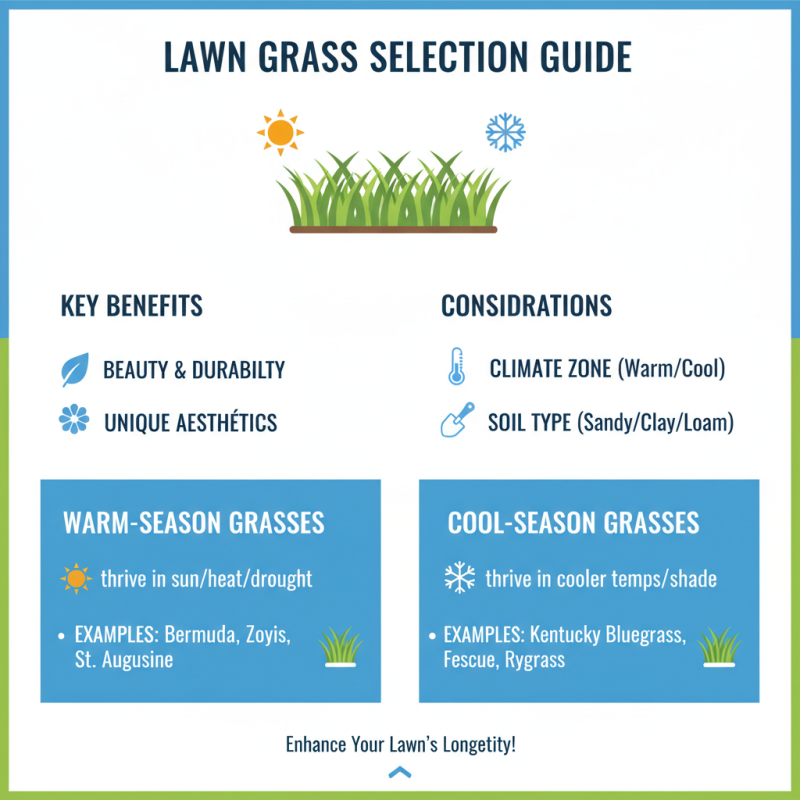
Choosing the right grass variety enhances your lawn's beauty and durability. Different species provide unique aesthetics and resilience. Consider your region's climate and soil type. For example, warm-season grasses thrive in sunny areas. They can withstand drought better than some cool-season varieties. Such choices impact your lawn's longevity.

Color and texture are crucial for aesthetics. Lush, vibrant grass can elevate your outdoor space. However, maintenance plays a vital role too. Some grasses require frequent mowing and fertilizing. Others need less care but may lack that rich green hue. Aesthetic appeal may lead to extra effort. Reflect on your willingness to maintain.

Inevitably, mistakes happen. You might choose a species that doesn't thrive. Perhaps it doesn’t blend well with existing plants. Soil testing can help prevent mishaps. It ensures nutrients match the grass's needs. Don't be afraid to revise your choices after observing your lawn. Learning from experience is key. Adapt and enjoy the journey of creating your perfect lawn.